
Some products buy an effects SDK and an editing SDK and stitch them together. It works — until the seams show: the recorded effect that the editor re-applies differently, the two content catalogs that drift apart, the support boundary that opens exactly where the two products meet. The alternative architecture removes the entire category of problems.
1. What the combined architecture is
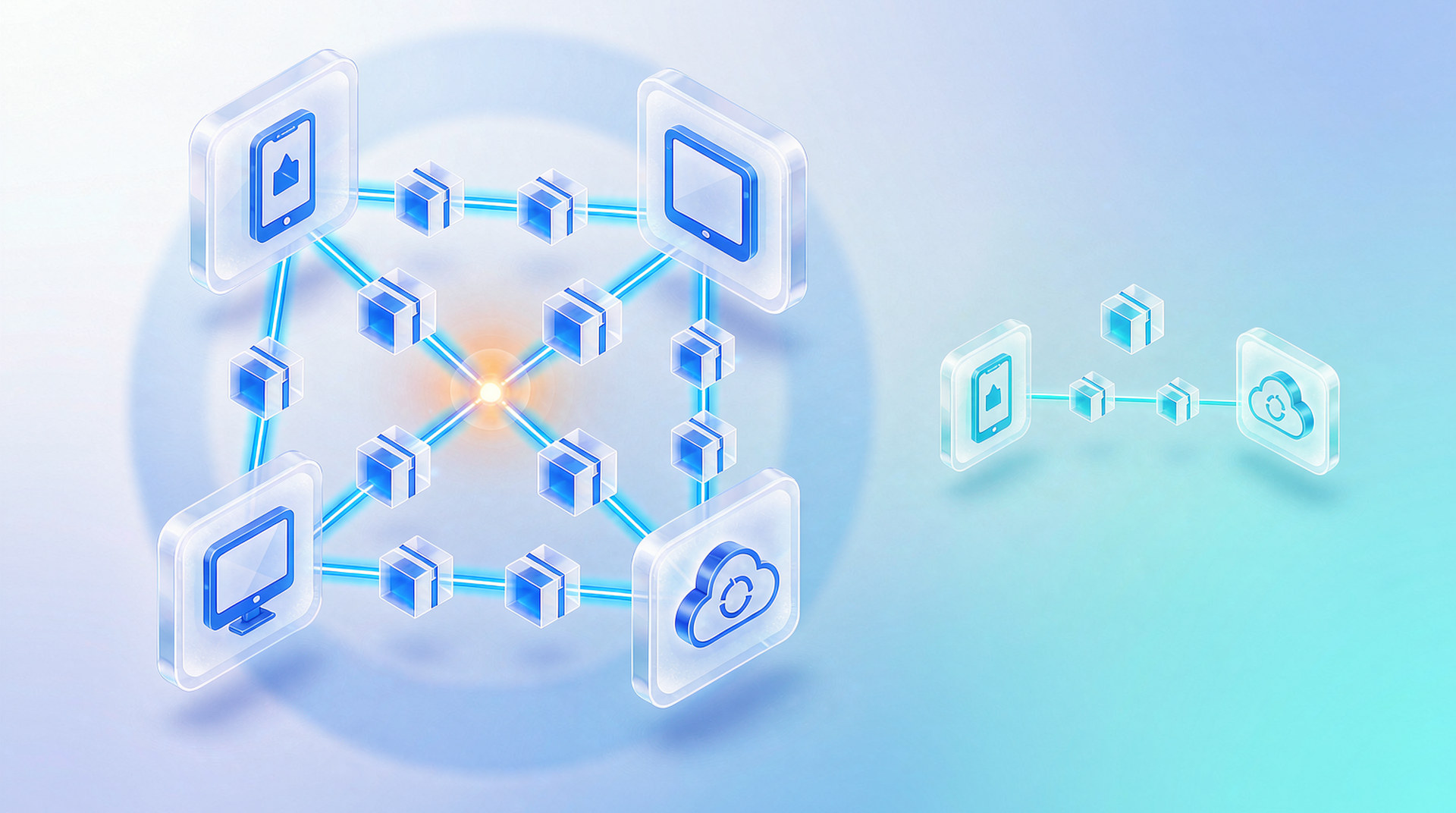
In the Meishe SDK, the effects pipeline and the editing pipeline are one system:
- At recording, effects render live on the camera preview — real-time, per frame, no processing gap — and bake into the footage as it records.
- On the timeline, the same effects system serves editing: filters, looks, and adjustments applied to clips, keyframable, adjustable.
- Behind both, one engine — over 20 years of development, more than 70 video patents — renders the preview, writes the file, and plays the timeline.
- Around both, one content system: a filter family authored once serves the camera and the editor from the same packages.
The user experience of that architecture: what they see while recording is what lands in the file, and what the editor shows is the same look from the same catalog. No seams, because there are none.
2. What the stitched alternative costs
When effects and editing come from different vendors, the seams are structural:
| Seam | What it costs |
|---|---|
| Format handoff | The effects vendor’s output meets the editor’s intake — conversion, quality boundaries, and format surprises your team owns |
| Content catalogs | Two systems, two authoring flows, two update cadences — and looks that drift between camera and timeline |
| Support boundary | When the recorded effect renders differently on the timeline, each vendor points at the other |
| Update coupling | The effects SDK updates on its schedule, the editor on its own — your integration validates both, every time |
| The preview gap | Effects that preview in one product and re-apply in another — the mismatch users notice |
None of these are hypothetical — they are the recurring integration tickets of the stitched architecture. The combined SDK exists because enough teams hit them.
3. What one pipeline unlocks
Beyond removing seams, the combined architecture enables things the stitched one cannot:
Effects that survive into editing. The look baked at record time is the look on the timeline — and because the editor’s effects share the same system, the user can adjust it further, from the same family, with the same rendering. Record with the warm look, dial it to standard in the edit — one catalog, consistent.
AI on effect-bearing footage. The AI production features — smart cutting, auto captions, auto color — run in the same pipeline the effects rendered in. The rough cut of the effect-recorded footage is ready moments after the take; the captions land on material that already looks right.
One content calendar. A seasonal filter family publishes once — to the camera and the editor, on every platform, through your channel. The stitched alternative publishes twice, tests twice, and drifts anyway.
Quality end to end. The engine that rendered the effect on the preview writes the file and plays the timeline — preview, file, and edit share one rendering truth. The export carries what everyone saw.
4. The user experience, drawn in steps
The combined session, as the user lives it:
- Opens your app, taps record — the live preview shows them through the effect.
- Records confidently — what they see is what they get.
- The footage lands in the editor already carrying its look.
- Smart cutting hands them a rough cut; captions populate themselves.
- They refine — including adjusting the recorded effect’s family from the same catalog.
- They export — the file matches everything they saw.
Six steps, one engine, zero handoffs. Compare with the stitched flow — record in one surface, convert, import, re-apply effects, reconcile looks — and count the moments where the product’s polish leaks.
5. Where the combined architecture comes from
Effects and editing in one SDK is not a feature decision; it is a company decision. It requires the vendor to own the whole chain — camera rendering, file writing, timeline playback, export encoding — because the smoothness is the engine, not a layer over two products.
Meishe’s chain descends from two decades of video engine development, shipped across iOS, Android, web, React Native, Flutter, and desktop as one family. That is the bet this guide describes: the vendor built one pipeline, so your product never has to build the second.
6. Why teams pick Meishe
- One engine, record to export. Effects, editing, AI, and export share a single pipeline — the seams never existed to fix.
- A unified content system. One catalog serves the camera and the timeline, on every platform, through your channel.
- AI in the same pipeline. Cutting and captions on effect-bearing footage, ready at the timeline.
- Preview-equals-output rendering. What users see while recording is the file, the edit, and the export.
- Named engineers on one integration. A dedicated project team and free upgrades through the cooperation period.
Architecture decisions earn their keep quietly, in the tickets that never file and the seams that never open. One SDK for effects and editing is that kind of decision — invisible on launch day, decisive on every day after. The teams that choose it spend their engineering on features; the teams that stitch spend theirs on the stitching, forever.
There is also a purchasing angle to the one-SDK architecture: one license scope, one support number, one renewal conversation. Stitched setups negotiate twice and reconcile forever — the seam costs money before it costs engineering, and the invoice is usually the first place it shows.
One purchasing note on the unified architecture: it also simplifies security review. One vendor, one component inventory, one data flow to document — the compliance conversation that takes enterprises weeks with stitched setups takes hours with a single pipeline, and the audit trail reads like a product description instead of a system map.
| Pipeline moment | Stitched (two vendors) | One SDK |
|---|---|---|
| Recording effect | Renders in vendor A’s surface | Renders in the engine |
| File handoff | A-to-B conversion, your problem | Never happens |
| Timeline look | Re-applied, may differ | Same catalog, same render |
| Content updates | Two catalogs, two publishes | One package, everywhere |
| Support | Boundary between vendors | One named team |
One last note on where the combined architecture shows up in reviews: users never mention it. They say the app feels consistent, that recording and editing feel like one thing, that looks never surprise them. Consistency is invisible when it works — and the reviews your product earns are the architecture’s only public appearance.
FAQ
Can two separate SDKs really not be stitched well?
They can be integrated — and then your team permanently owns the seams: format handoffs, catalog drift, support boundaries, and update coupling. The combined SDK deletes the category, not just the first ticket.
Does the combined model lock us into one vendor’s effects?
The content system is open at the authoring layer — your designers produce filter and sticker families in the asset tools, delivered through your channel. One engine, your content.
What about products that only edit, never record?
The editing side stands alone — and the effects system still serves it. The combined architecture costs nothing when unused and removes the ceiling when the product grows capture.
How do we verify the seam-free behavior?
Record with an effect, export, and compare the file to the preview; then adjust the effect’s family on the timeline and check consistency. One session — mismatches are exactly what the test reveals.
Where does AI fit in this architecture?
In the same pipeline — smart cutting and auto captions run on footage the engine itself rendered, and auto color grades across effect-bearing material consistently.