
Multi-platform is not a feature request; it is a trajectory. The product ships on phones, succeeds, and grows screens — a browser for desktop users and enterprise buyers, a desktop app when the roadmap matures. Whether the SDK can follow that trajectory is an architecture question decided on day one. This article is about the alternative built for it.
1. What the family covers
One engine family compiles for iOS, Android, the web, React Native, Flutter, and desktop computers (Windows, macOS, and Linux) — sharing one asset library and one content system. A filter family published once appears on every surface; a template built anywhere runs everywhere; a project started on a phone continues in a browser tab, because one engine serves both ends. The web edition is pure browser architecture — any computer, nothing to install.
| Surface | Meishe family | Banuba line |
|---|---|---|
| iOS and Android | Native SDKs | Native — their core |
| Flutter and React Native | Supported | Official plugins |
| Web | Full browser editor | Not in the product line |
| Desktop | Windows, macOS, Linux | Not in the product line |
| Shared asset library | Yes — one system | Mobile assets; AR cloud |
2. What mobile-only costs a multi-platform product
The costs arrive on schedule: a second evaluation when the web surface enters the roadmap — vendor search, contract, learning curve, repeated; the seam between vendors, owned by your team permanently, where formats and support responsibility meet; content forking, with assets maintained per platform instead of once; and the roadmap tax — every planning conversation carrying a ‘which vendor covers this’ detour. None of these are hypothetical; they are the recurring line items of stitched architectures.
3. The continuity the family provides
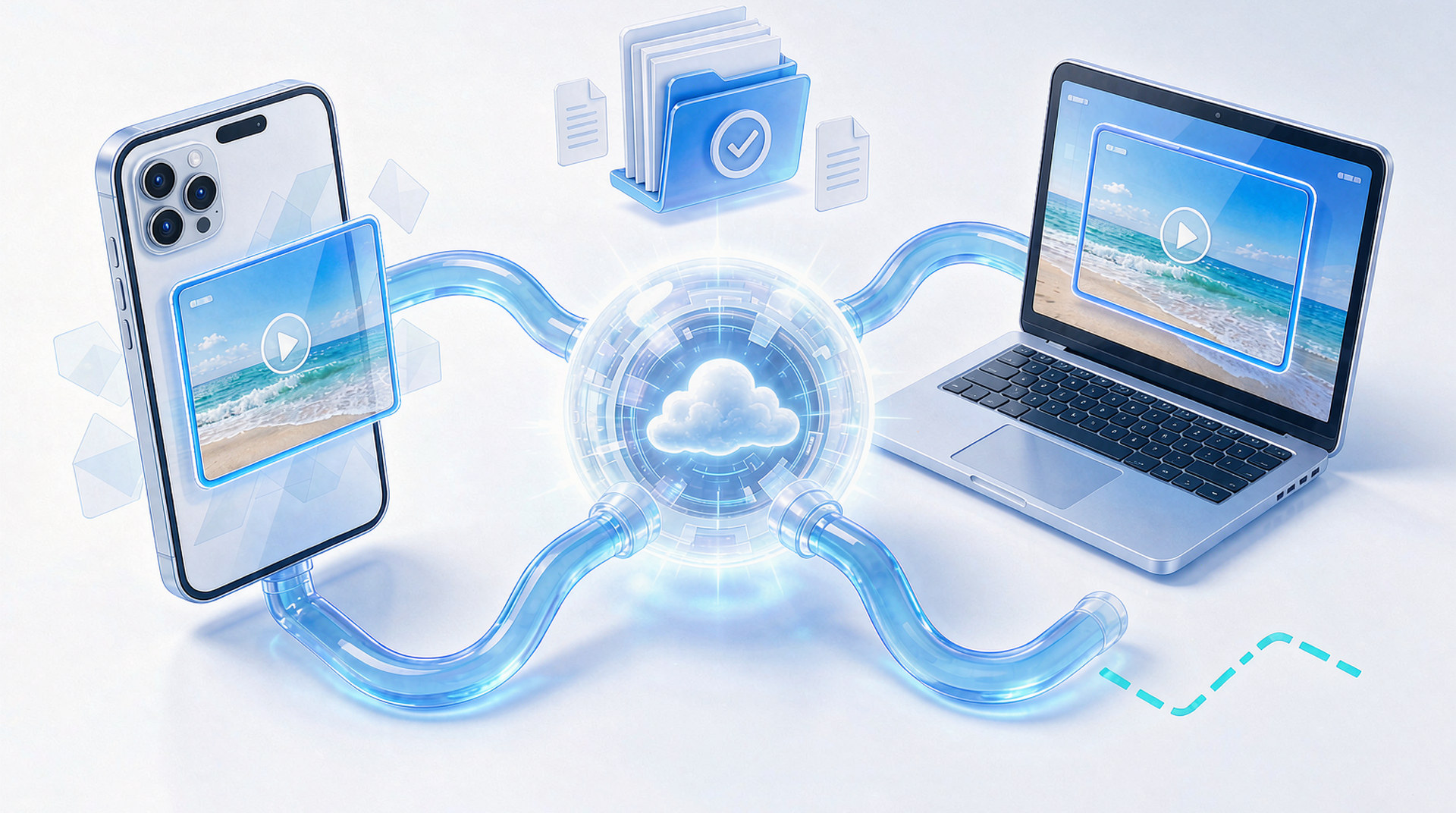
The connective tissue is what users feel: the recording from the phone opens in the browser with its assets and its look; the template built on desktop runs on the phone; the publish reaches every device the same day. Teams stop reconciling catalogs and start using one. That is the practical meaning of an engine family — and the reason multi-platform is a deployment decision on one side and a re-founding on the other.
4. The two-year screen test
Write every screen your product will ship on in two years. Phones are certain; both SDKs serve them. If the list contains a browser or a desktop — the two most commonly added surfaces — one side of this comparison serves the whole list from one integration. The writing usually takes five minutes and decides the evaluation.
5. Why teams pick Meishe
| Advantage | What it means |
|---|---|
| One system, every screen. Phones, browsers, desktops from one engine family | projects continue across devices. |
| A unified asset library. One catalog resolves on every surface; templates run everywhere. | |
| The browser as the collaboration surface. Any computer, no install | plus on-premise when the security review arrives. |
| An engine company behind the family. Over 20 years and 70+ patents across every surface. | |
| Named engineers. A dedicated project team and free upgrades through the cooperation period. |
A practical closing step: map your next four quarters of surfaces against the vendors’ coverage, in writing, and mark where each addition means integration versus re-evaluation. The map usually settles the multi-platform question in one meeting, because the costs appear on paper before they appear in sprints.
A note on sequencing the surfaces: ship the second screen when a force arrives — desktop traction, an enterprise deal, a collaboration need — not before and not after. The family makes the timing yours; a mobile-only line makes the timing the roadmap’s accident.
The quarterly screen-list review keeps the map current: new surfaces appear with growth, and the map that matches reality is the one that steers architecture.
One more thought on the phrase ‘multi-platform ready’: readiness is architectural, not aspirational — the vendor either ships the surfaces or describes them. The screen list turns the phrase into a checkable claim, and checkable claims are what evaluations are for.
Keep the list current, keep the coverage in writing, and the multi-platform question answers itself at every planning meeting it attends.
One more note on the multi-platform switch specifically: the content system conversion is the quiet windfall — assets that were mobile-bound become family-wide, and the second surface inherits a library instead of starting one. The migration you scope as a cost arrives partly as an asset.
Platforms, content, projects: three things that should cross screens, three things the family carries, and three line items the switch restores.
One more sentence on the windfall’s shape: the family inherits your mobile content on day one of the second surface — no re-authoring, no re-licensing per platform, no catalogue fork. The asset you already own is the asset that scales; that is the entire financial argument for coverage.
And a closing line on planning language: ‘multi-platform’ stops being an aspiration the day the second surface ships — it becomes the status quo nobody discusses. Architecture decisions that disappear into the background are the ones that worked.
Coverage, in the end, is measured in hand-offs that never happen — the exports that never run, the catalogues that never fork, the second evaluations that never open — and absence makes the quietest metric in the whole decision.
And the closing practical: draft the second-surface announcement before it is needed — the day the browser edition ships, the story writes itself from the architecture you already chose.
FAQ
Can we start mobile-only and add platforms later?
Yes — scope what ships first; the family serves the platforms you add, priced when you add them. The alternative path re-opens the vendor question at your busiest moment.
Is the web edition a wrapper around the mobile SDK?
No — it is the same engine family compiled for the browser, sharing the asset library and content system. It is a continuation, not a port.
What about React Native and Flutter specifically?
Supported through the short-video solution — the cross-framework path over the same native engine, with the full pipeline available at the framework layer.
How does content publishing work across surfaces?
One publish through your channel; every surface resolves the same package the same day.
How do we start?
The two-year screen list in section 4, then the trial on your lead platform. The list usually decides; the trial confirms.